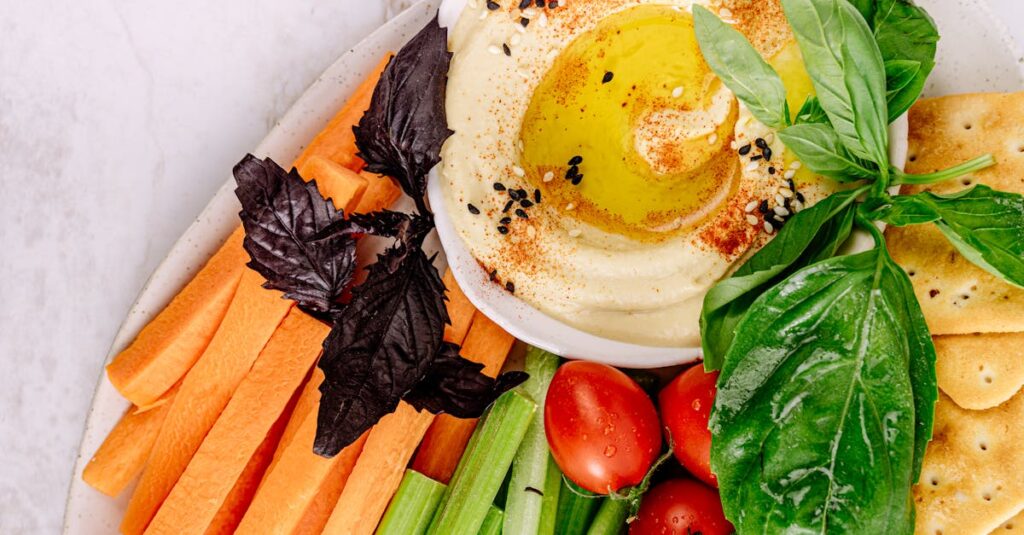
This quick Mediterranean hummus and veggie platter is a fresh, budget-friendly meal saver that keeps my hungry teenagers happy and healthy every night.
The front door slams, the school bags hit the hallway floor with a heavy thud, and the familiar chorus begins. “Mom, what is there to eat? I am starving!” As a forty-five-year-old single mother managing a full-time job, a household, and the chaotic schedules of two growing teenagers, this daily moment used to fill me with immediate dread. My energy levels in my mid-forties are not quite what they used to be, and after a long day at the office, the thought of standing over a hot stove for an hour makes me want to weep quietly in the pantry.
For a long time, my go-to solution was the drive-thru or frozen convenience meals. But my budget was taking a beating, and my body was starting to protest the constant influx of sodium and processed ingredients. I needed a dinner option that required absolutely zero cooking, cost less than a takeout order, and actually nourished our bodies. That is when the Mediterranean hummus and veggie platter became the undisputed champion of our kitchen table.
This is not just a simple snack board; it is a complete, satisfying, and colorful meal that has transformed our chaotic weeknights into moments of genuine connection. Let me share how this simple platter saved my sanity, my grocery budget, and my peace of mind.
Feeding Teens with a Mediterranean Hummus and Veggie Platter
If you have teenagers, you know that trying to get them to eat a plate of steamed broccoli can feel like negotiating a high-stakes peace treaty. However, I discovered a strange psychological trick: if you arrange the exact same vegetables on a beautiful wooden board with a delicious dip, they will devour them without a single complaint. There is something about the interactive, communal nature of a platter that appeals to kids and adults alike.
When I serve a Mediterranean hummus and veggie platter, dinner becomes an event rather than a chore. We sit around the kitchen island, dipping, scooping, and talking about our days. There are no plates to wash afterward, except for the single large board and a few small bowls. For a single mom who carries the entire mental load of household chores, the gift of a five-minute cleanup is absolutely priceless.
Moreover, this meal is incredibly gentle on my food budget. By utilizing seasonal vegetables, canned chickpeas for a homemade touch, and pantry staples like olives and olive oil, I can feed my family of three a nutrient-dense dinner for a fraction of the cost of a single takeout meal. In an era where grocery prices seem to rise every single week, this platter has become my financial safety net.
Choosing the Best Ingredients for Your Mediterranean Hummus and Veggie Platter
The beauty of this meal lies in its versatility. You do not need to follow a strict, expensive recipe. Instead, you can adapt the ingredients based on what is on sale at your local market or what is currently lingering in your refrigerator crisper drawer. However, to make it a truly satisfying dinner, you need a balance of healthy fats, complex carbohydrates, and lean proteins.
Making the Perfect Mediterranean Hummus and Veggie Platter on a Budget
The anchor of this board is, of course, the hummus. While you can easily purchase a container from a trusted store-bought brand at the supermarket, making it from scratch is incredibly cheap and takes less than five minutes. All you need is a food processor, a can of drained chickpeas, a scoop of tahini, some fresh lemon juice, garlic, and a drizzle of quality olive oil.
According to nutritional guidelines published by the Harvard T.H. Chan School of Public Health, a diet rich in legumes, olive oil, and fresh vegetables is associated with a lower risk of cardiovascular disease and improved overall longevity. As a woman navigating the hormonal shifts of midlife, prioritizing these heart-healthy, hormone-balancing ingredients has become a vital part of my self-care routine. The fiber in the chickpeas keeps my digestion happy, while the healthy fats from the tahini and olive oil keep my skin glowing and my joints moving smoothly.
To build your budget-friendly shopping list, focus on these five essential categories:
- The Creamy Dips: Hummus is the star, but adding a dollop of tzatziki (made with Greek yogurt, grated cucumber, and dill) adds a refreshing contrast.
- The Colorful Veggies: English cucumbers, sweet bell peppers, cherry tomatoes, and raw carrots provide the essential crunch and a wide spectrum of vitamins.
- The Salty Accents: Kalamata olives, marinated artichoke hearts, and crumbled feta cheese bring that signature Mediterranean tang.
- The Satisfying Carbs: Warm, soft pita bread cut into triangles, or baked pita chips for an extra element of crunch.
- The Protein Boosters: To ensure my growing kids stay full until breakfast, I often add hard-boiled eggs, canned stuffed grape leaves, or a handful of roasted almonds to the board.
A Step-by-Step Guide to Assemble Your Mediterranean Hummus and Veggie Platter
Assembling the board is an art form, but it requires absolutely no professional culinary skills. In fact, I often enlist my kids to help me put it together. It gives them a sense of ownership over the meal, and they are much more likely to try new vegetables when they have hand-selected and arranged them themselves.
First, select your serving vessel. You do not need an expensive artisanal charcuterie board; a large wooden cutting board, a flat serving platter, or even a clean baking sheet lined with parchment paper works beautifully. The key is to make the presentation look abundant and inviting.
Start by placing your dips in small, colorful bowls and placing them on the board first. I like to put the main bowl of hummus right in the center, creating a focal point. Use the back of a spoon to create a deep swirl in the top of the hummus, then fill that swirl with a generous pour of extra virgin olive oil, a sprinkle of paprika, and a few whole chickpeas for a professional, restaurant-quality look.
Next, arrange your sturdier dippers, such as the pita bread triangles and cucumber slices, radiating outward from the bowls. This creates natural pathways for dipping and ensures everything is easy to reach. Fill in the larger open spaces with piles of bright red cherry tomatoes, vibrant yellow bell pepper strips, and baby carrots.
Finally, tuck the smaller items into the remaining gaps. Scatter olives, crumbled feta cheese, and sprigs of fresh parsley or mint around the edges. When you are finished, the board should look like a rich, colorful mosaic of fresh food. There should be very little of the board itself showing underneath. This visual abundance makes the meal feel special, celebratory, and incredibly appetizing.
Meal Prep Tricks for Your Mediterranean Hummus and Veggie Platter
As a single working mother, I have learned that prep work is the secret to surviving the mid-week madness. While assembling the Mediterranean hummus and veggie platter only takes fifteen minutes, you can cut that time down to under five minutes with a little bit of weekend preparation.
On Sunday afternoons, I spend about twenty minutes washing and cutting all of our vegetables. I slice the cucumbers into thick rounds, cut the bell peppers into long strips, and wash the cherry tomatoes. I store each vegetable in individual glass containers lined with a dry paper towel to absorb excess moisture. This keeps the veggies incredibly crisp and fresh for up to five days.
If I am making homemade hummus, I will whip up a double batch on Sunday as well. It stores beautifully in an airtight container in the refrigerator. Having these ingredients prepped and ready to go means that on my absolute busiest nights—when my daughter has track practice and my son has band rehearsal—we can still enjoy a wholesome, home-cooked meal without any of the stress.
This meal prep routine has also put an end to the dreaded “produce graveyard” in my refrigerator crisper drawer. Before I adopted this platter lifestyle, I would routinely throw away half-used bags of spinach and slimy cucumbers at the end of every week. Now, every single vegetable we buy has a designated home on our dinner board, reducing our food waste to practically zero.
Adapting the Platter for Dietary Needs and Picky Eaters
One of the greatest struggles of cooking for a family is accommodating different tastes and dietary restrictions. My son is an adventurous eater who loves spicy foods and olives, while my daughter prefers simple, mild flavors and absolutely loathes tomatoes. In the past, this meant I was often preparing two different meals, which was exhausting and expensive.
The Mediterranean hummus and veggie platter elegantly solves this problem. Because nothing is mixed together, it is a naturally deconstructed meal. My daughter can load her plate with cucumbers, carrots, pita bread, and plain hummus, while my son can pile his high with spicy red pepper hummus, kalamata olives, feta cheese, and tomatoes. Everyone gets exactly what they want, and I only have to prepare a single meal.
This platter is also incredibly easy to adapt for various dietary needs. If you are hosting friends or have family members with allergies, you can easily make this board gluten-free by substituting the traditional pita bread with gluten-free crackers or endive leaves for dipping. If you are eating dairy-free or vegan, simply omit the feta cheese and ensure your tzatziki is made with a plant-based yogurt alternative. It is a naturally inclusive meal that allows everyone to feast safely and happily together.
For my own nutritional needs as a midlife woman, I love that this meal is naturally low-glycemic. The combination of high-fiber vegetables and healthy fats prevents the sharp blood sugar spikes and crashes that leave me feeling exhausted by 8:00 PM. Instead, I feel sustained, energized, and ready to tackle the evening chores and bedtime routines with a clear head.
“Swapping our heavy Friday night pizza for this fresh vegetable platter was the best decision I made this year. My kids actually eat their vegetables now, and I don’t feel bloated or exhausted after dinner.”
— Sarah, Mother of Two
Embracing the Joy of Simple, Shared Meals
In our fast-paced world, it is easy to fall into the trap of thinking that a good mother must spend hours in the kitchen preparing elaborate, multi-course hot meals every single night. But I have realized that my kids do not care about fancy recipes or complicated culinary techniques. What they care about—and what they will remember when they grow up—is the atmosphere of our home and the quality of the time we spend together.
By serving this Mediterranean hummus and veggie platter, I am able to step out of the stressful role of the exhausted, cooking-and-cleaning machine, and step into the role of an active, engaged mother. I can sit down with my children, look them in the eyes, and actually listen to their stories because I am not distracted by boiling pots or ticking oven timers.
This platter has taught me that simple food, prepared with love and shared with joy, is truly the ultimate luxury. It has brought health, peace, and simplicity back into our home, one delicious, crunchy bite at a time. If you are a busy parent struggling to find balance in your kitchen, I encourage you to clear off your dining table, arrange a beautiful spread of fresh vegetables and creamy dip, and watch the magic happen.
Frequently Asked Questions
How can I make a Mediterranean hummus and veggie platter satisfy my hungry kids without meat?
You can easily boost the protein and staying power of the platter by adding hard-boiled eggs, canned stuffed grape leaves, a bowl of mixed nuts, or edamame. Combining the plant-based protein in the hummus with fiber-rich vegetables and healthy fats ensures that even the most active teenagers stay full and satisfied for hours.
What is the best way to prevent soggy vegetables when preparing ahead?
To keep your vegetables crisp during meal prep, thoroughly dry them after washing. Store them in airtight glass containers lined with a dry paper towel at the bottom to absorb any excess moisture. Avoid slicing juicy vegetables like tomatoes too far in advance; save those for the day of assembly.
How can I build this platter on a tight budget without overspending?
Focus on purchasing seasonal vegetables, which are always cheaper and taste better. Make your own hummus using dry or canned chickpeas and store-brand tahini. Buy pantry staples like olives and feta in bulk, and only use what you need for each assembly to stretch your ingredients over multiple meals.
