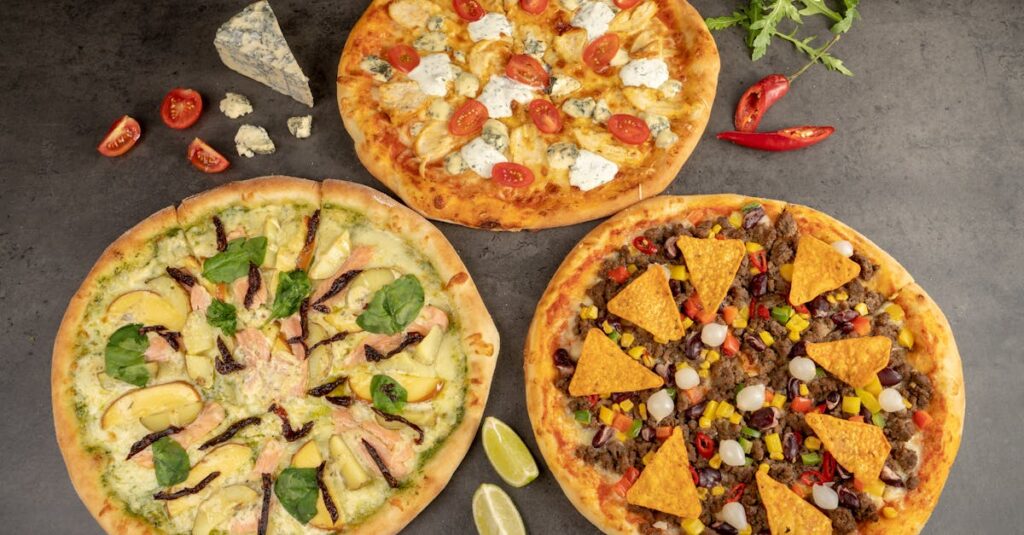
This crisp cauliflower crust pizza with pesto is a healthy, gluten-free dinner solution that my kids actually love. No more soggy crusts!
There is a specific kind of exhaustion that only a single mother in her mid-forties can truly understand. It is the five o’clock slump, that frantic moment when you walk through the front door after a long day at the office, drop your bags, and realize that you have exactly thirty minutes to produce a meal that is both healthy and appealing to children. For years, my kitchen was a battleground. I wanted nutrient-dense, low-carb options to help keep my energy levels stable and my waistline in check, while my children demanded the comfort of cheesy, carb-heavy classics. The solution that finally brought peace to our dinner table was a homemade, crispy cauliflower crust pizza with pesto loaded with vibrant, fresh vegetables.
I still remember the first time I attempted this recipe. It was a complete disaster. I had read online that cauliflower could be transformed into a crispy pizza crust, but my first attempt resulted in a mushy, wet mass that had to be eaten with a spoon. I felt defeated, frustrated, and ready to call for takeout. However, as a mother, I do not give up easily. I spent weeks tweaking the process, testing different binders, and adjusting my cooking techniques until I perfected a crust that actually holds its shape, holds up to toppings, and has that satisfying crunch we all crave. Today, I am sharing the secrets behind making the perfect cauliflower crust pizza with pesto so you can bypass the trial-and-error phase and go straight to culinary success.
Finding Peace at the Dinner Table with Cauliflower Crust Pizza with Pesto
The journey to finding a meal that satisfies both a health-conscious forty-something woman and two growing, picky eaters is filled with compromise. Traditional pizza, while delicious, always left me feeling sluggish and bloated the next day. As I have aged, my digestion has become less forgiving of heavy processed flours, and my metabolism simply cannot process simple carbohydrates the way it used to. I needed a way to enjoy my favorite comfort food without the physical toll.
That is where the idea of utilizing a vegetable-based crust came in. When you introduce a cauliflower crust pizza with pesto to your weekly meal prep, you are not just substituting ingredients; you are transforming your relationship with weeknight dinners. Pesto, with its rich blend of basil, garlic, olive oil, and parmesan, provides a robust flavor profile that masks the earthy taste of the cauliflower. This makes it incredibly easy to slip an abundance of green vegetables past even the most suspicious child. My youngest, who once declared that anything green was poisonous, now happily devours two slices of this pizza without a single complaint.
Why Traditional Crusts Failed My Family and My Waistline
For a long time, I relied on frozen, store-bought pizzas for those chaotic nights when cooking from scratch felt impossible. While convenient, the ingredient lists on those boxes began to worry me. They were packed with preservatives, sodium, and refined sugars. Even the gluten-free options sold by popular commercial brands were often loaded with potato starch and tapioca flour, which caused my blood sugar to spike and crash, leaving me exhausted by bedtime.
I realized that if I wanted a healthier lifestyle for myself and my children, I had to take control of what went into our food. Making a crust from scratch using fresh cauliflower seemed intimidating at first, but once you master the technique, it takes very little active time. The key difference between a failed, soggy crust and a triumphant, crispy cauliflower crust pizza with pesto lies entirely in water management. Cauliflower is composed of over ninety percent water, and if you do not remove that moisture, your pizza will never crisp up. Once I understood this fundamental rule of food science, everything changed.
The Secret to a Crispy Cauliflower Crust Pizza with Pesto
If you want to achieve that coveted, hand-holdable pizza slice, you must be disciplined about removing moisture from your riced cauliflower. Over the years, I have tried several methods, including roasting the cauliflower rice first or microwaving it. Through trial and error, I found that steaming the riced cauliflower lightly and then letting it cool is the most reliable starting point.
Once the cauliflower is cool enough to handle, transfer it to a clean kitchen towel, a nut milk bag, or several layers of cheesecloth. This is where you get a bit of a workout. Twist the towel and squeeze with all your might. You will be astonished by how much liquid drains out. Keep squeezing until you cannot get another drop of water out of the ball of cauliflower. What you should be left with is a dry, compact pulp that resembles flour. This dry pulp is the canvas for your cauliflower crust pizza with pesto, and omitting this step will guarantee a soggy dinner.
Selecting the Best Green Base: Pesto Varieties for Cauliflower Crust Pizza with Pesto
While a classic marinara sauce is wonderful, it introduces a significant amount of moisture back onto your carefully dried crust. This is why a rich, oil-based sauce is a game-changer. A high-quality pesto acts as a moisture barrier, protecting the crust from getting soggy while infusing every bite with concentrated herbal goodness. I prefer to use a basil pesto made with extra virgin olive oil, toasted pine nuts, fresh garlic, and a hard, aged cheese.
For those who may have nut allergies in the family, you can easily substitute the pine nuts with toasted sunflower seeds or pumpkin seeds. If you are running short on time, a premium store-bought pesto from a trusted organic brand works beautifully. Just ensure you drain any excess oil from the top of the jar before spreading it onto your crust, as too much oil can also soften the base during the final bake.
The Essential Bind: How to Hold Your Cauliflower Crust Together
Without gluten, a cauliflower crust needs help staying together. Through my culinary experiments, I have found that a combination of a farm-fresh egg and finely grated cheese works best as a binder. The egg provides structure through protein coagulation during baking, while the cheese melts and solidifies to create a sturdy network that holds the riced cauliflower together.
I prefer using a mixture of finely shredded mozzarella and freshly grated parmesan. The parmesan adds a deep, savory umami flavor and has a lower moisture content than mozzarella, which further helps in achieving a crisp texture. If you are looking for a dairy-free option, you can substitute the cheese with a plant-based alternative and use a flax egg, though the crust may be slightly more delicate to handle.
A Step-by-Step Cooking Guide for Busy Parents
Now that you understand the principles behind this dish, let us walk through the actual preparation. I like to prepare the cauliflower base over the weekend and keep it in the freezer, which makes weeknight assembly incredibly fast. Here is how to create a mouthwatering cauliflower crust pizza with pesto from scratch.
Ingredients You Will Need
For the crust:
- 1 medium head of fresh cauliflower (yielding about 4 cups of riced cauliflower)
- 1 large farm-fresh egg, lightly beaten
- 1/2 cup finely shredded low-moisture mozzarella cheese
- 1/4 cup freshly grated parmesan cheese
- 1/2 teaspoon dried oregano
- 1/2 teaspoon garlic powder
- 1/4 teaspoon fine sea salt
For the toppings:
- 1/3 cup of high-quality basil pesto
- 1/2 cup shredded mozzarella or provolone cheese
- 1/2 cup heirloom cherry tomatoes, halved
- 1/4 cup thinly sliced red onion
- 1/4 cup sliced zucchini or yellow squash
- A handful of fresh baby arugula (added after baking)
- A drizzle of high-quality balsamic glaze (optional)
Step 1: Preparing the Cauliflower Rice
Cut the cauliflower into florets, discarding the tough inner core. Place the florets into a food processor and pulse until they reach the consistency of fine grains of rice. Be careful not to over-process, or you will end up with a puree. If you do not own a food processor, a standard box grater works just as well, though it requires a bit more physical effort.
Step 2: Cooking and Drying
Place the riced cauliflower into a microwave-safe bowl and heat for 4 to 5 minutes, or steam it on the stovetop for about 5 minutes until it is tender. Let it cool completely. Once cool, transfer the cauliflower to your kitchen towel and squeeze out every last drop of water. This is the most critical step for your cauliflower crust pizza with pesto, so take your time and squeeze repeatedly.
Step 3: Mixing the Crust Dough
Preheat your oven to 400 degrees Fahrenheit (204 degrees Celsius) and line a baking sheet or a pizza stone with high-quality parchment paper. In a large bowl, combine the squeezed cauliflower, beaten egg, shredded mozzarella, grated parmesan, oregano, garlic powder, and sea salt. Mix with your hands until a dough-like consistency forms. It should feel pliable and hold together when pressed.
Step 4: Shaping and Pre-Baking
Transfer the dough to the prepared baking sheet. Using your hands, pat the dough out into a circle or rectangle, keeping it about one-quarter of an inch thick. Try to make the edges slightly thicker to create a defined rim. Bake the crust in the preheated oven for 15 to 20 minutes, or until the top is golden brown and the edges are noticeably crispy. Do not skip this pre-bake, or your crust will remain soft under the toppings.
Step 5: Adding Toppings and the Final Bake
Remove the pre-baked crust from the oven. Spread the pesto evenly across the surface, leaving a small border around the edges. Sprinkle the mozzarella cheese over the pesto, and then arrange your halved cherry tomatoes, red onion slices, and zucchini. Return the pizza to the oven and bake for an additional 8 to 10 minutes, until the cheese is melted and bubbling, and the vegetables are tender. For an extra touch of flavor, scatter fresh arugula and drizzle a tiny bit of balsamic glaze over the top just before slicing.
Troubleshooting Your Cauliflower Crust Pizza with Pesto
Even with the best instructions, cooking can sometimes throw us curveballs. If your first attempt at making a cauliflower crust pizza with pesto does not turn out perfectly, do not despair. Here are a few common issues and how to easily resolve them on your next try.
If your crust is sticking to the parchment paper, it usually means the paper was not of high quality, or the crust was not baked long enough to release naturally. Always use a premium, non-stick parchment paper, and never try to bake this crust directly on a metal pan without a liner. If you find the crust is crumbling when you pick it up, you may need to add a bit more cheese or an extra egg yolk next time to strengthen the bind, or you might not have squeezed enough water out during the drying phase.
For reheating leftovers, I highly recommend avoiding the microwave, which will make the crust soggy. Instead, place your leftover slices in a dry skillet over medium-low heat and cover with a lid for a few minutes. This reheats the toppings while recrisping the bottom of the crust beautifully. Alternatively, an air fryer set to 350 degrees Fahrenheit for 3 minutes works like magic.
The Health Benefits That Keep Me Feeling Vibrant at Forty
As a single mother, I cannot afford to get sick, and I certainly cannot afford to feel sluggish. My health is my most valuable asset. According to nutritional research published by recognized dietary journals, cauliflower is an exceptional source of vitamins C and K, as well as folate and fiber. Replacing a standard flour crust with a vegetable-based alternative significantly lowers the glycemic index of the meal, helping to prevent insulin spikes that lead to fat storage and afternoon fatigue.
Furthermore, the healthy fats from the extra virgin olive oil in the pesto are excellent for cardiovascular health and skin elasticity, which is something I pay closer attention to these days. When I eat this cauliflower crust pizza with pesto, I feel satisfied, light, and nourished. I do not experience that heavy, uncomfortable fullness that usually accompanies traditional pizza nights, meaning I still have the energy to help with homework, clean up the kitchen, and perhaps even enjoy a few quiet moments of reading before bed.
Kid-Approved Veggies That Actually Taste Amazing
One of the greatest victories of this recipe is its versatility. You can customize the toppings to suit whatever vegetables you have lingering in your crisper drawer at the end of the week. To make this cauliflower crust pizza with pesto appealing to children, I recommend slicing the vegetables very thin. Thinly sliced zucchini and onions soften quickly in the oven, losing their raw, intimidating crunch and turning sweet and caramelized.
You can also turn pizza night into an interactive activity. I lay out small bowls filled with different toppings—sliced mushrooms, sweet bell peppers, baby spinach, and olives—and let my kids decorate their own sections of the pizza. When children are involved in the preparation of their food, they are infinitely more likely to eat it. It transforms dinner from a battle of wills into a shared creative experience, which is incredibly precious for a busy family.
Frequently Asked Questions
How can I prevent my cauliflower crust pizza with pesto from falling apart?
The secret to keeping the crust together is removing as much moisture as possible from the riced cauliflower before mixing. Squeeze it thoroughly in a clean kitchen towel until it is completely dry, and ensure you use a combination of egg and cheese as a binder during assembly.
Can I prepare this cauliflower crust pizza with pesto ahead of time for busy weeknights?
Yes, you can absolutely make this ahead. You can pre-bake the cauliflower crust, let it cool completely, and store it in the freezer wrapped in parchment paper and foil. When ready to eat, simply add the pesto and toppings, and bake directly from frozen until hot and crispy.
Is it possible to make this pizza dairy-free?
Yes, you can substitute the mozzarella and parmesan in the crust and toppings with your favorite plant-based cheese alternatives. Make sure to use a dairy-free pesto as well. Note that vegan cheeses melt differently, so the crust may be slightly softer than the traditional version.
